
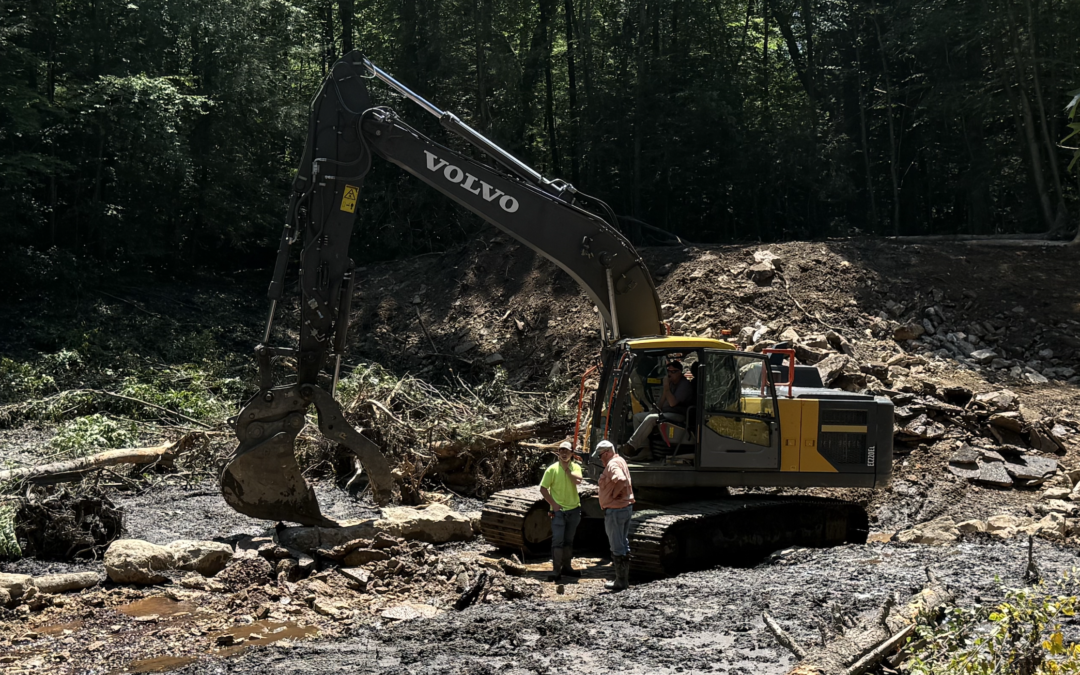
For more than a century, dams along Silk Mill Run in Jim Thorpe, Pennsylvania, altered the natural flow of this cold-water stream. The first was constructed in the 1920s to create a water supply for the borough, with additional structures later creating a series of obstructions that limited fish passage and affected aquatic habitat.
The Borough of Jim Thorpe and Wildlands Conservancy recently partnered to remove four full or partial dams and address a fifth timber obstruction along Silk Mill Run. For Flyway Excavating, the project represented an important milestone: our 100th dam removal.
Project Goals
- Restore passage and habitat for wild brook trout and other cold-water species.
- Restore natural stream flow, sediment transport, and floodplain function.
- Improve water quality and address nonpoint source pollution.
- Stabilize the stream channel and eroding stream banks.
- Improve recreational opportunities and address existing safety concerns.
Flyway’s Involvement
Flyway was selected to complete the dam removal and stream restoration work along Silk Mill Run, an Exceptional Value stream with documented wild brook trout reproduction. The project required removing structures of different sizes and conditions while reconstructing the stream channel to more closely resemble undisturbed portions of Silk Mill Run.
Rather than simply demolishing the dams and hauling away the material, the restoration plan called for stone, timber, and other natural materials recovered during removal to be reused wherever possible for channel reconstruction, bank stabilization, and aquatic habitat.
Flyway’s scope of work included:
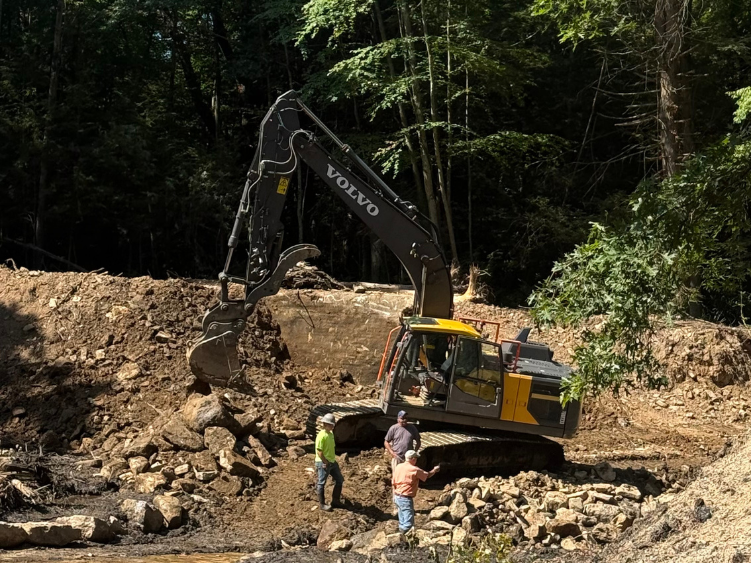
- Removing a 15-foot-high, 140-foot-wide stone masonry dam originally constructed in the 1920s to create a reservoir of water for the borough
- Removing an 8-foot-high, 80-foot-wide dam located approximately 300 feet downstream
- Breaching an 8-foot-high, 190-foot-wide stone dam and reconstructing a natural channel through its former impoundment
- Removing the remnants of a previously breached L-shaped stone masonry dam that continued to impede the stream’s natural flow
- Repositioning an 8-inch-high timber obstruction to establish a thalweg and restore fish passage
- Managing accumulated sediment during phased dam breaches and channel reconstruction
- Reusing stone and large wood from the existing structures to stabilize stream banks and reconstruct natural habitat
- Restoring and stabilizing access areas while minimizing clearing along the wooded stream corridor
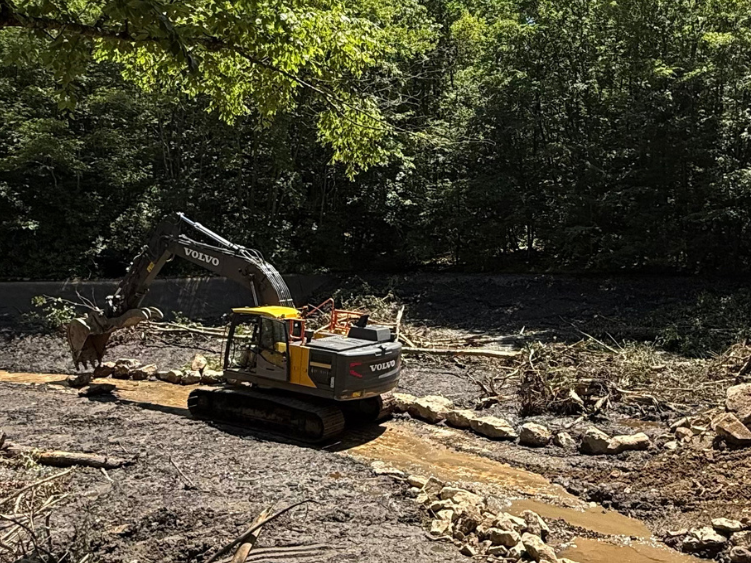
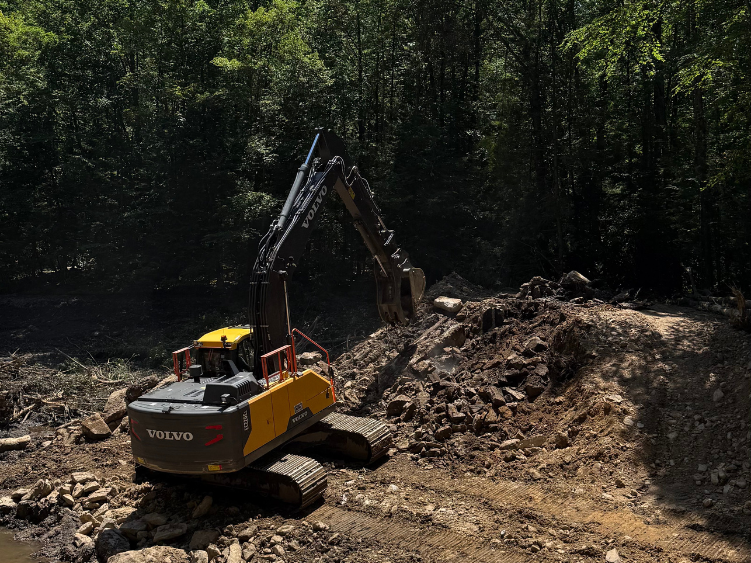
The work at each location required a different approach. At the uppermost dam, sediment depths reached as much as 36 inches, requiring sediment to be managed throughout a controlled, phased breach. Stone salvaged from the dam structure was incorporated into the restored channel and habitat features.
At the second dam, the impoundment water was drawn down before equipment entered the site for the final breach. Rock and large timbers were then reused to stabilize the stream banks and reconstruct the channel, with no material exported from the site.
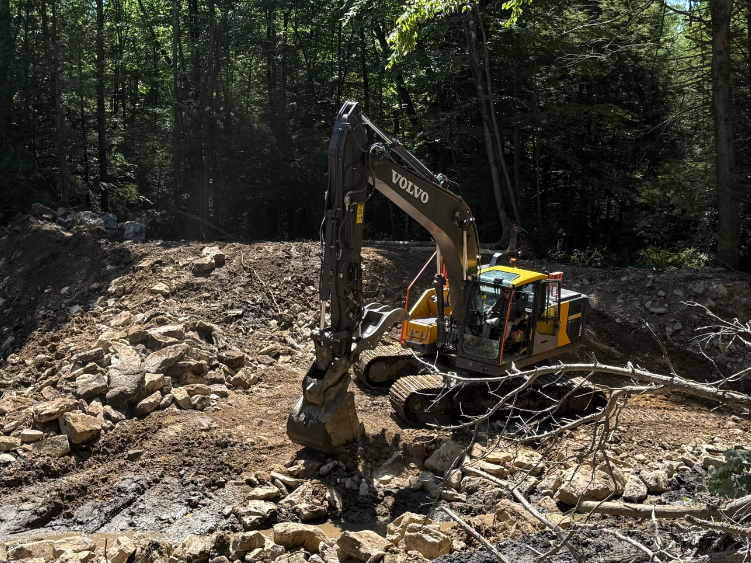
Farther downstream, Flyway addressed a partially breached 190-foot-wide dam and an eroded access trail that had intercepted a natural drainage course. Restoration included re-establishing that drainage and placing large boulders and logs along the trail to prevent future off-road vehicle use.
The Result
Removing the obstructions along Silk Mill Run has reconnected a cold-water stream that had been fragmented for generations, giving wild brook trout and other aquatic species greater access to upstream habitat. It’s also restored the natural movement of water and sediment through the watershed.
At the former dam sites, Flyway reconstructed the streambed using natural channel design principles and, where possible, stone and large wood salvaged in the process of removing the dams. The work stabilized stream banks, restored altered drainage, and transformed former impoundments into free-flowing sections of water.
For Flyway Excavating, the project also marked our 100th dam removal, a milestone built one stream at a time through projects designed to reconnect waterways and restore the natural systems that depend on them.