
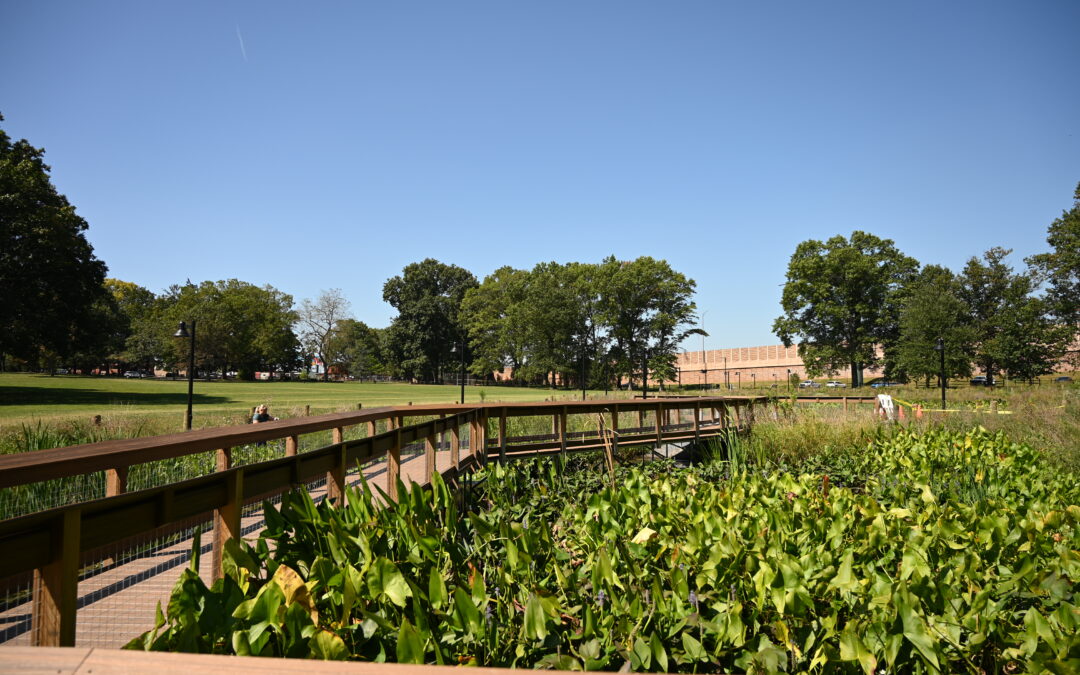
For decades, traditional stormwater management has relied on “gray infrastructure” systems such as pipes, culverts, detention basins, and concrete channels to move water away from developed areas as quickly as possible. While typically effective, these systems were designed only to carry water, not to improve water quality or support ecosystems. Today, however, communities are increasingly turning to green infrastructure, solutions that work with nature, to address their stormwater management needs.
Green infrastructure uses natural processes and vegetation to absorb, filter, and slow stormwater runoff before it enters waterways or municipal systems. According to the EPA, green stormwater infrastructure can reduce runoff volumes while also improving downstream water quality, restoring habitat, and providing social and economic benefits to communities.
Green the Gray
Traditional stormwater systems carry runoff away from roads, parking lots, and developments to prevent pooling and flooding, typically emptying into rivers, lakes, or other bodies of water. In doing so, they can also increase erosion, overwhelm sewer systems (if connected to the local sanitary sewer system), and transport pollutants directly into our waterways. These problems are becoming even more common as these gray infrastructure systems, designed using historic rainfall assumptions, struggle to keep up with today’s increasingly intense weather events.
Instead of treating stormwater as waste to be removed as fast as possible, green infrastructure encourages it to soak into the ground or evapotranspire (evaporate from soil and transpire from plants) back into the atmosphere by employing rain gardens, permeable pavement, wetlands, infiltration basins, and other strategies. This distributes it across landscapes rather than concentrating it entirely within underground infrastructure networks like traditional stormwater systems do.
Green infrastructure also offers cost benefits versus traditional gray infrastructure. Plus, it improves aesthetics and helps combat urban heat island effects by planting trees and other vegetation in infrastructure elements like parks, bioswales, and roof gardens. Choosing native trees and plants promotes biodiversity, attracting birds, insects, and other wildlife to these pollinator-friendly green spaces.
Hybrid Water Systems
The advantages of green infrastructure systems don’t mean traditional systems are obsolete. For many projects, the most effective solution is a hybrid approach. Pipes, culverts, and engineered drainage systems still play an important role in protecting homes and businesses, roads, and public safety. However, integrating green infrastructure can reduce strain on these systems while creating long-term environmental and community benefits.
Read more about how Flyway Excavating created a hybrid system in downtown Lancaster, PA, using a 6,000-gallon cistern, bioretention features, and water harvesting components to ease the demands on the city’s combined sewer system while providing more green space for people to enjoy.
Green Infrastructure for Stormwater Management
As municipalities and property owners continue prioritizing sustainability, green stormwater infrastructure is becoming an increasingly valuable method for modern site development and waterway rehabilitation projects. Beyond simply moving water, today’s stormwater strategies are focusing on restoring balance to the landscape itself.
Are you interested in learning more about green stormwater infrastructure? Our team of experts would love to discuss your project! Give us a call or fill out our contact form to get started.